Brutal Truth: The Daily Standup Is Broken — Fix It Now
The daily standup broken format is the most expensive ritual in engineering — and nobody has an invoice to prove it. Nine people on a call. Six of them muted. Someone narrating their Jira tickets while the rest wait for permission to leave. Most teams already know it isn’t working. They just haven’t done anything about it yet. Here’s the data, the real cost, and what actually works instead.
The daily standup broken format — here’s what the data says
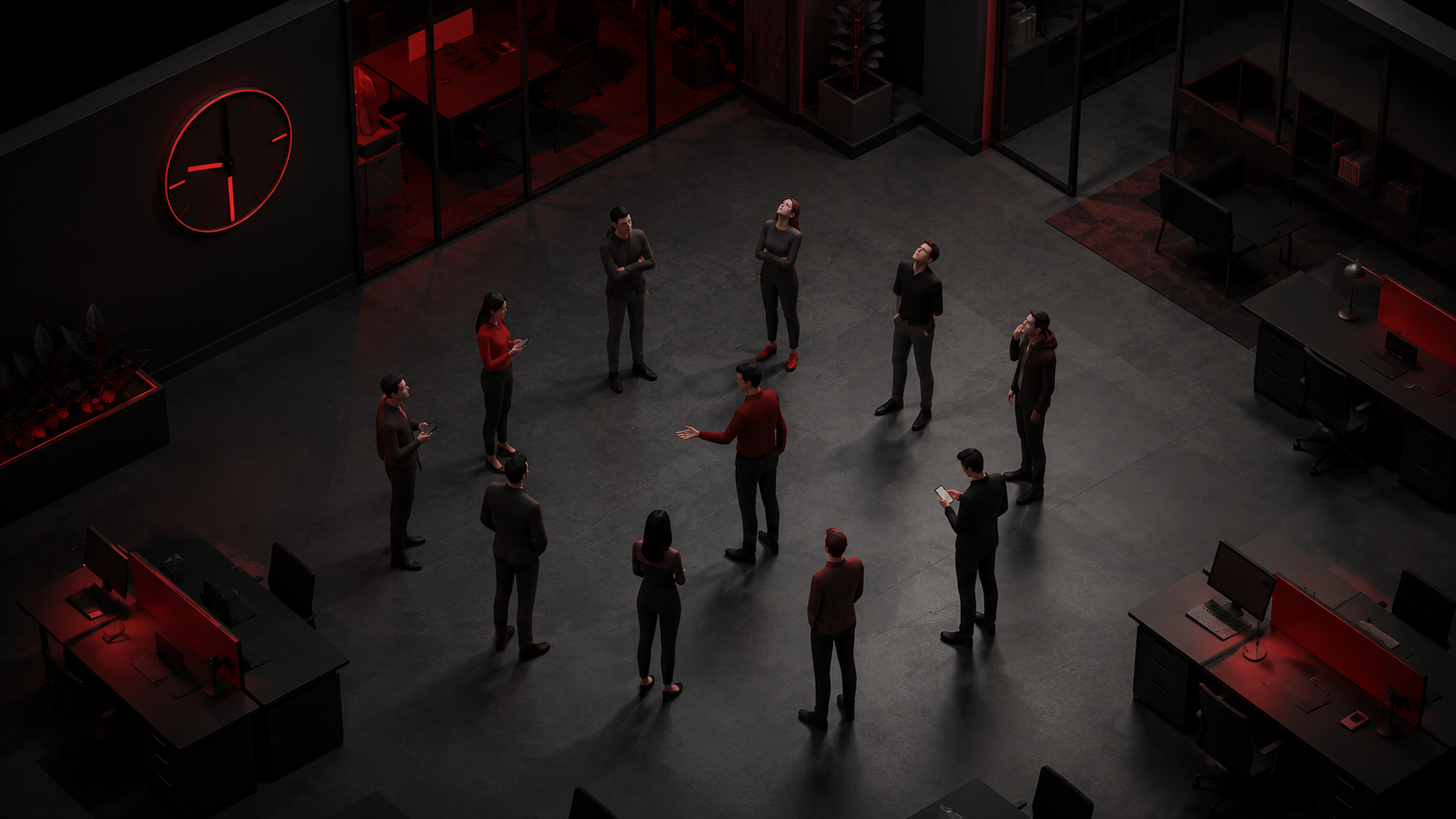
Let’s start with the uncomfortable version of the truth: the daily standup was a good idea for a specific context that most teams no longer have. It was designed for a 5-person team standing around a whiteboard, in the same office, working on tightly coupled code. The key word is standing — the physical discomfort of staying on your feet was the forcing function that kept it short. Nobody sits down for a 45-minute standup.
Remove the whiteboard, add Zoom, distribute across three time zones, and scale to 12 people — and you’ve kept the ritual while destroying every condition that made it work. What you’re left with is a daily ceremony that interrupts the most cognitively valuable part of the day, to share information that already exists in your project management tool, with people who could read it themselves in 90 seconds.
According to Flowtrace’s State of Meetings Report 2025, the average knowledge worker spends 392 hours per year in meetings — ten full workweeks. Of those, 72% are considered ineffective by the people attending them. The daily standup isn’t an outlier in that statistic. It’s a leading contributor.
Five reasons the daily standup stops working — and why they compound
This isn’t one problem. It’s five problems running simultaneously, each one making the others worse. Most teams fix none of them and just suffer through the format indefinitely — because changing a meeting ritual requires someone to say out loud that it isn’t working, which itself feels like an accusation.
It fires at exactly the wrong time of day
Most standups happen between 9 and 11am — the cognitive peak for the majority of developers. Research on deep work consistently shows that recovering full focus after any interruption takes approximately 23 minutes. A standup at 9:30am doesn’t cost 15 minutes. It costs 15 minutes of meeting plus 23 minutes of ramp-back, multiplied by every person in the room. On a team of 8, that’s over 5 hours of deep work capacity destroyed before anyone has written a line of code — every single morning.
It narrates information that already exists in writing
The three standup questions — what did you do yesterday, what will you do today, what’s blocking you — were designed for a world where work was invisible between check-ins. That world ended when teams started using Jira, Linear, GitHub, and Notion. In most modern engineering teams, every piece of information shared in the standup is already documented, timestamped, and searchable. The standup isn’t surfacing information. It’s performing it — out loud, to people who could have read it in less time than it took to join the call.
It doesn’t scale — it just gets longer
A disciplined 5-person standup takes 10 minutes. The same format with 12 people takes 25 minutes and generates 7 status updates that are completely irrelevant to most people in the room. There’s no natural mechanism that keeps it short as teams grow — only social pressure, which erodes. What starts as a 10-minute check-in quietly becomes a 30-minute ritual that everyone dreads and nobody has the political capital to cancel.
It trains people to hide blockers, not surface them
The standup was supposed to make blockers visible early. In practice, the format does the opposite. Admitting a blocker in a group meeting is a public declaration of difficulty — and in most team cultures, that carries a social cost. So people learn to phrase blockers as progress: «still working through a technical issue, should be resolved today.» The blocker exists. The standup just provided a stage for the fiction that it doesn’t.
Its cost is completely invisible
A daily standup with 8 people at an average fully-loaded rate of $85/h, running 20 minutes per day, costs approximately $22,933 per year. That number doesn’t appear on any budget line. It doesn’t show up in any quarterly report. It has no invoice attached to it. It just accumulates, invisibly, every single working day — while the team treats it as free because nobody has ever bothered to do the arithmetic.
The arithmetic nobody runs — what your standup actually costs per year
Here’s the calculation for typical engineering team configurations. The numbers use fully-loaded hourly rates and assume 240 working days per year. They do not include the 23-minute focus recovery cost — that’s a separate line item that makes the numbers significantly worse.
| Team size | Daily duration | Avg. rate | Annual cost | Verdict |
|---|---|---|---|---|
| 5 people | 15 min | $75/h | $7,031/yr | Marginal |
| 8 people | 20 min | $85/h | $18,133/yr | Worth reviewing |
| 12 people | 25 min | $90/h | $33,750/yr | Hard to justify |
| 15 people | 30 min | $95/h | $53,531/yr | Structurally broken |
Add the 23-minute focus recovery back in. For a 12-person team at $90/h, the real annual cost of the standup — meeting time plus cognitive recovery — is closer to $75,000 per year. That’s more than the fully-loaded cost of a junior engineer. Every year. Spent on a 25-minute ritual that 44% of participants believe could be replaced by a Slack message.
Four formats that actually work — pick the one that fits your team
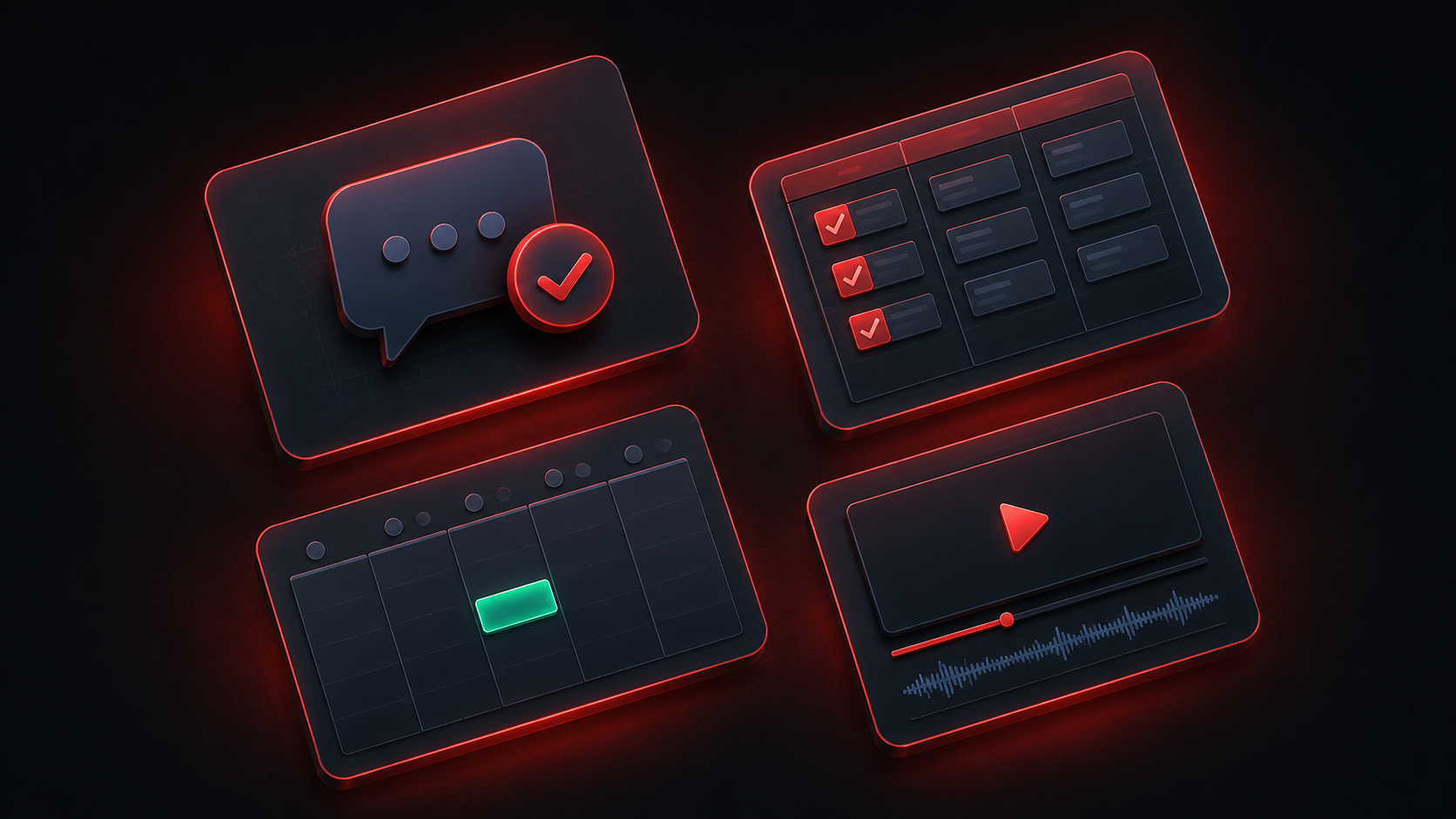
The goal isn’t to eliminate coordination. It’s to get the same output — blockers surfaced, progress visible, priorities aligned — without the synchronous bottleneck. These four options solve different versions of the problem. The right one depends on where your standup is actually breaking.
Async standup bot
Tools like Geekbot or DailyBot send the three standup questions at each person’s local time. Answers post to a shared Slack channel. Nobody needs to be present simultaneously. The information is identical to a synchronous standup — minus the 23 minutes of focus recovery per person per day.
Written project updates
If your tasks are already visible in Linear, Jira, or GitHub, the standup is narrating information that already exists. Replace it with a brief weekly written comment per person. Blockers go directly in the ticket — where the person who can actually unblock them will see it, not in a meeting where they probably aren’t.
One weekly sync + async the rest
Keep one 30-minute synchronous meeting per week with a written agenda and a real decision attached. Replace the other four standups with async updates. Teams that make this switch consistently report the weekly meeting is better — because after a full week, there are actually things worth discussing.
Loom video updates
For design reviews, tricky debugging, or anything that’s hard to describe in text — a 2-minute Loom carries more information than a standup and costs the team a fraction of the time. The viewer watches asynchronously, can rewind, and has a permanent record. 2 minutes to record vs 20 minutes of meeting. The tradeoff is not close.
The comparison nobody puts in a table — standup vs the alternatives
| Format | Time cost/person/day | Works async | Surfaces blockers | Scales to 15+ |
|---|---|---|---|---|
| Daily standup (sync) | 15–30 min + 23 min recovery | No | Sometimes | Poorly |
| Async bot (Slack) | 3–5 min | Yes | Yes | Well |
| Written project updates | 2–3 min | Yes | Yes | Well |
| Weekly sync + async daily | 5 min/day avg | Mostly | Yes | Well |
| Loom video updates | 2–4 min | Yes | Yes | Depends |
How to actually make the switch — without a mutiny
The technical part of replacing a standup takes about 10 minutes. The social part takes longer — because the standup has become a ritual, and rituals carry weight beyond their functional purpose. People use it to feel connected. Managers use it as a visibility proxy. Removing it without replacing those functions creates resistance even from people who hate the meeting. Here’s how to do it without starting a civil war.
Put a number on it before you say anything else
Don’t open with «I think we should reconsider our standup format.» Open with the annual cost. Calculate it in front of your team — participants, duration, hourly rate. When people see that their 20-minute daily standup costs $18,000 per year, the conversation shifts from «why are you challenging our process» to «how do we get that back.» Numbers do what arguments can’t. The meeting stops being free.
Propose a 2-week experiment, not a permanent change
«Let’s try async updates for two weeks and see what breaks» is a completely different ask than «we’re cancelling the standup.» One is reversible. One sounds like a threat. After two weeks, the data does the persuading — people have gotten two hours per week back and rarely want to give them up. The trial is the mechanism for getting permission for the change that was always going to be permanent.
Keep one real synchronous meeting per week
Don’t eliminate all synchronous contact. Replace four standups with async updates and keep one proper 30-minute weekly meeting — with a written agenda, a real decision to make, and a named owner for each action item. Most teams find this single meeting is noticeably better than the standup it replaced, because there’s actual material to discuss after a full week of work.
Replace the blocker function explicitly
The one legitimate job of the standup is surfacing blockers before they compound into missed deadlines. Don’t remove the standup without replacing that function deliberately. A #blockers Slack channel, a blocker field in Linear, or a flag in your Jira workflow all work better — because the person who can actually unblock someone sees it immediately, in context, rather than 24 hours later at the next standup.
Conclusion
The daily standup broken format persists not because developers are bad at running meetings. It’s broken because the format was designed for a specific set of conditions — small team, same office, same timezone, tightly coupled work — and most teams no longer have any of those conditions. The ritual outlived the context that made it useful, and nobody cancelled it because nobody had the standing to cancel it.
The good news is that the actual coordination value of the standup is real — it’s just not delivered efficiently by a synchronous meeting. Progress visibility, blocker surfacing, team alignment: all of these are achievable in 3–5 minutes per person per day via async tools, without the 23-minute focus recovery cost, without the timezone gymnastics, without the mandatory group performance every morning.
What you’re spending $18,000 to $75,000 a year on isn’t coordination. It’s the illusion of coordination. The first step is making the cost visible. The second step is deciding whether the illusion is worth the price.
FAQ: daily standup broken
Why is the daily standup considered broken?
The daily standup fails structurally for most modern teams because it fires at the worst possible time (peak cognitive hours), narrates information that already exists in written tools, scales badly beyond 5-6 people, and gradually shifts from genuine communication to a daily performance of productivity. Research shows 72% of meetings are ineffective and 44% of workers say status meetings could be replaced by a document.
What is the real cost of a daily standup?
An 8-person standup at 20 minutes/day and $85/h costs approximately $18,133 per year in direct salary. Add the 23-minute cognitive recovery period each developer needs after the interruption, and a 12-person team’s real standup cost is closer to $75,000 per year — roughly the fully-loaded cost of a junior engineer.
What are the best alternatives to the daily standup?
The four most effective alternatives: async standup bots (Geekbot, DailyBot, Standuply) for distributed teams; written updates in Linear, Jira, or GitHub for teams with good task hygiene; a weekly synchronous meeting plus async daily updates for teams that value face time; and Loom video updates for complex technical work that’s hard to describe in text.
How do I replace the daily standup without resistance?
Start by calculating the cost out loud in front of your team — the number changes the conversation. Then propose a 2-week experiment rather than a permanent cancellation. Keep one weekly synchronous meeting with a real agenda. Create an explicit blocker channel to replace the standup’s blocker-surfacing function. Most teams find alignment improves after the switch because information is more visible, not less.
How much focus time does a developer lose to a daily standup?
The direct cost is 15-25 minutes of meeting time. The indirect cost is the 23-minute cognitive recovery period required to return to deep focus after any interruption. A 9:30am standup effectively costs 38-48 minutes of productive capacity per developer per day — not the 15 minutes that appear on the calendar.
Do successful engineering teams skip daily standups?
Yes. GitLab runs 2,100 employees across 65+ countries with fewer than 4 synchronous meetings per week per person — no daily standup. Shopify deleted all recurring meetings with 3+ people in January 2023 and never reinstated the standup format. Basecamp has argued publicly against the daily standup for over a decade, favouring async written updates instead.